


Small Spaces / Buying guide
Under-Bed Storage: Measure the Pull-Out Space, Too
Low boxes, zip bags and drawers solve different problems. Here is how to choose around clearance, access and the contents you need to reach.
Nestdusk Editorial · Revised October 23, 2026
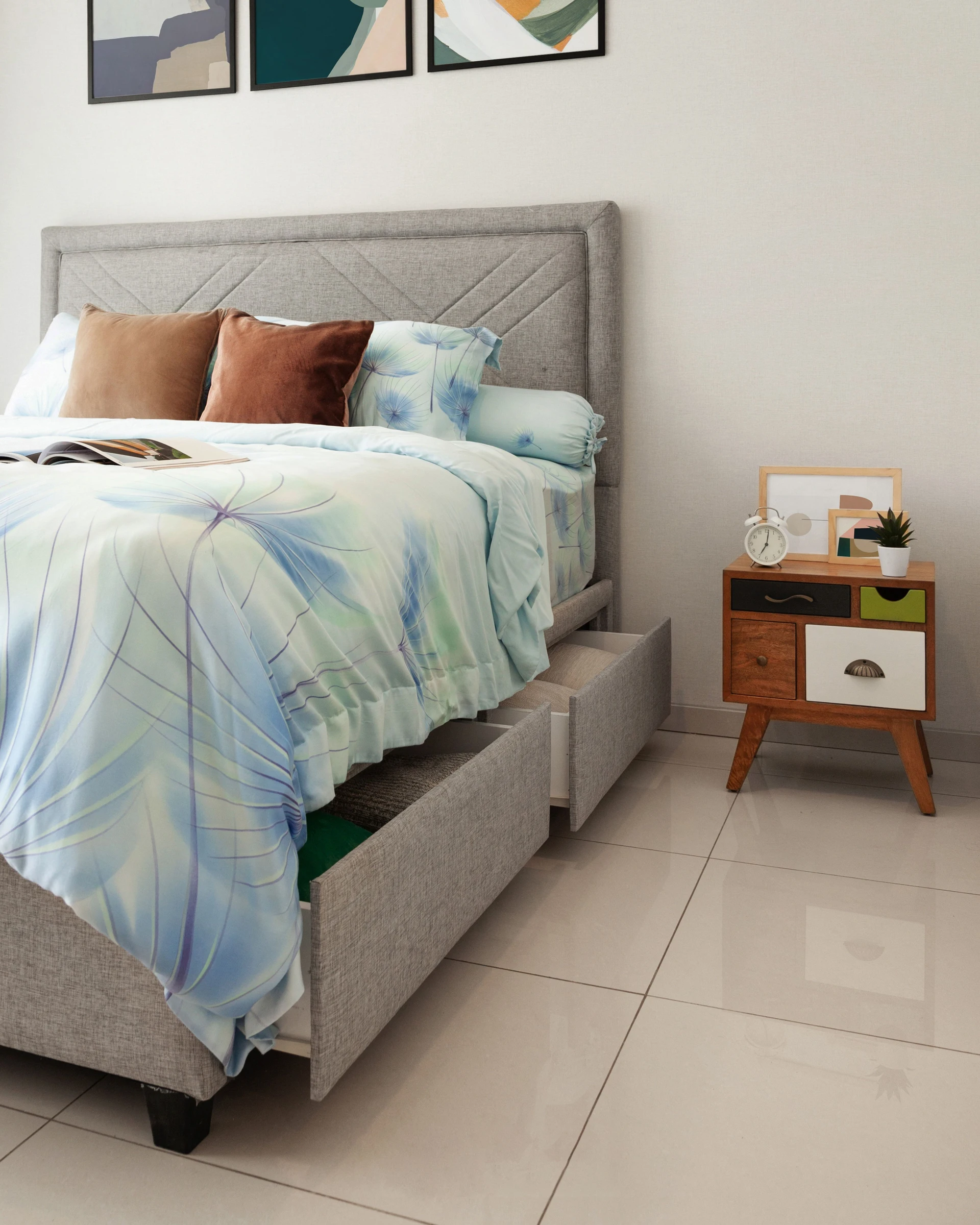
How to read this: This is an original selection and planning guide, prepared with AI assistance. Its dedicated photograph illustrates the topic; it is not evidence of a tested product.
Quick view
Use under-bed space for a defined category you can retrieve without moving half the room. Measure height and the complete pull-out route before selecting a container.
Pros
- Uses a space that may otherwise remain empty.
- Separate containers can organize occasional-use items by category.
Cons
- A bedside table can make a well-fitting box impossible to remove.
- Fabric bags and rigid boxes each need care suited to their material.
A box must fit twice
First measure the narrowest opening beneath the frame, including any support rail. Then measure the space required to pull the box fully out. A container that slides under the bed but cannot clear a nightstand is not usable storage. Add the lid, handle and wheels to your measurements; the advertised body height may not describe the full assembled container.
Mark the extraction path with an empty box you already own. Check both sides of the bed if one is tight. The photograph shows an integrated storage-bed arrangement as an example of access; it is not a reviewed loose box or a promise that drawers will fit an existing frame.
Choose for the contents and frequency
Rigid lidded boxes make sense when you want defined compartments and can lift the lid after removal. Flexible bags can be easier to fit around an awkward frame, but overfilling can increase their height and strain closures. Keep the contents clean and dry, and follow the container maker’s guidance for the materials you plan to store.
Label the end visible from the room. A short inventory such as spare sheets is more useful than miscellaneous. Put rarely needed categories furthest away, while keeping regular bedding where retrieval will not require shifting furniture.
Test before ordering a set
One correctly sized container is a better first order than a complete coordinated set. Check it at home with its intended contents, including the lift-out motion. Once the trial works, decide whether more containers solve a real need or simply invite the accumulation of unused things.
Compare the delivered cost per usable container, not just the advertised capacity. Wheels, dividers and reinforced handles matter only if they help the route and contents you have. Leave enough access to clean under the bed as well as enough room to store.
Who should buy or use this approach?
Someone storing clean seasonal textiles or similarly suitable items beneath an accessible bed.
Who should pass?
Someone who needs frequent access from a crowded side of the bed or has moisture conditions unsuitable for the planned contents.
The verdict
Use under-bed space for a defined category you can retrieve without moving half the room. Measure height and the complete pull-out route before selecting a container.
Sources & scope
The selection framework is Nestdusk editorial analysis. Check the exact product instructions, measurements and seller terms for any item you consider.
Written for this edition, October 23, 2026. No live sale or stock claim is made. Editorial standards · Photo licenses.