


Small Spaces / Buying guide
Shoe Storage for a Narrow Entryway: Check the Door Swing
A practical way to compare open racks, slim cabinets and a simple tray without shrinking the route into your home.
Nestdusk Editorial · Revised October 23, 2026
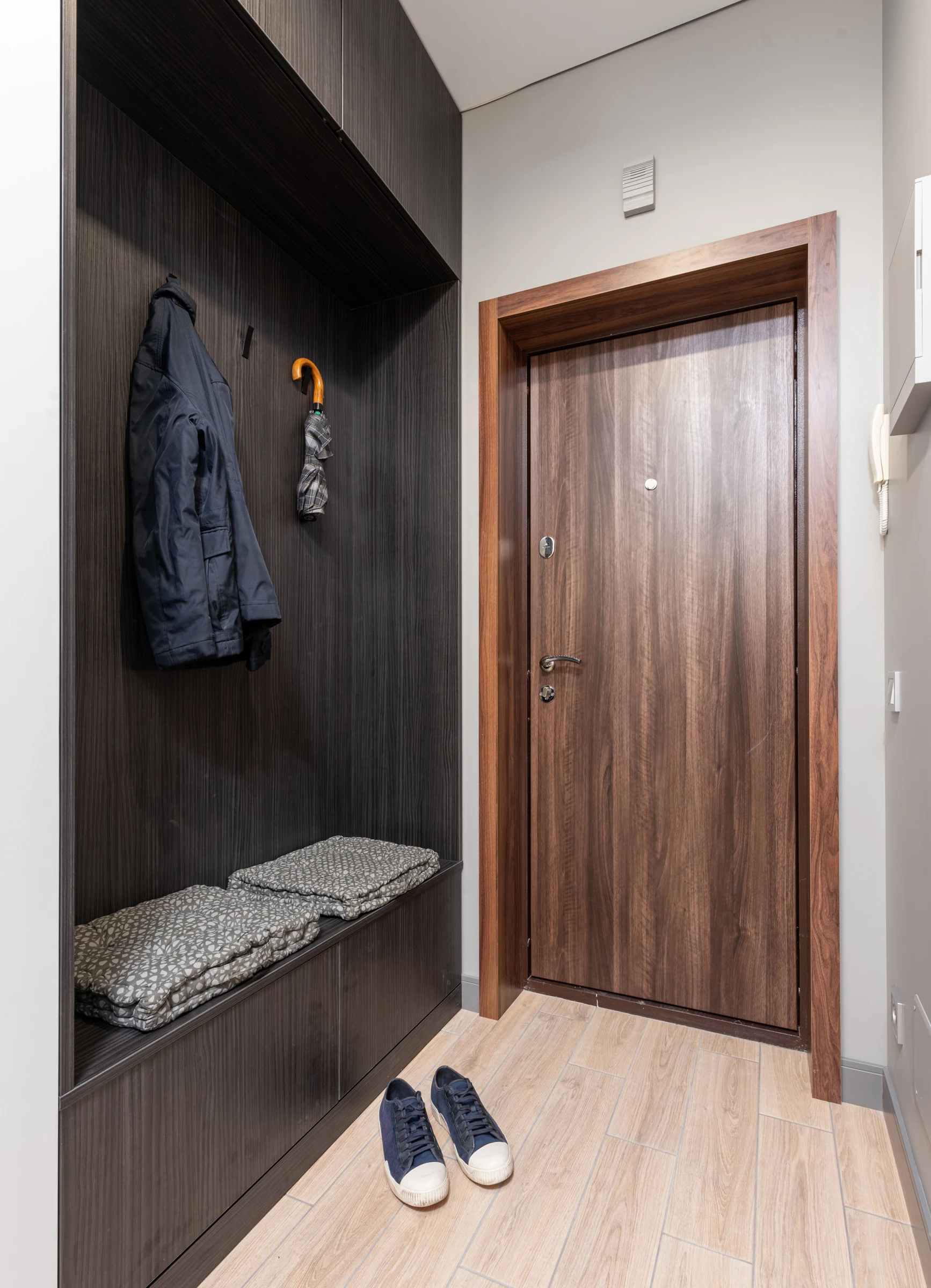
How to read this: This is an original selection and planning guide, prepared with AI assistance. Its dedicated photograph illustrates the topic; it is not evidence of a tested product.
Quick view
Choose the shallowest storage that holds the shoes used this week and still lets the door, the route and the cleaning routine work.
Pros
- A small active-shoe zone reduces the amount of furniture required.
- Open and closed options can be compared against the same measured space.
Cons
- Slim cabinets may not fit larger shoes or boots.
- A closed cabinet can require wall anchoring even in a rental.
Measure the moving parts first
Open the entrance door fully, then open any nearby closet. The usable furniture zone is the space left after these movements, not the full length of the wall. Include protruding handles and skirting boards when comparing a cabinet. If the door cannot perform its normal movement, choose another location rather than relying on a promise to keep the cabinet closed.
Make a paper footprint of the candidate and leave it in place through an ordinary evening. Bring in groceries, put on a coat and reach for your keys. This quick rehearsal often reveals a daily inconvenience that a neat floor-plan drawing misses.
Give current shoes priority
Count the pairs that need to be near the entrance now. Seasonal footwear can live elsewhere if you have a suitable dry storage location. A low open rack works best when you value quick access and can tolerate the visible shoes. A tray is a lower-commitment starting point for a small collection; check the care requirements of the floor beneath it.
A slim tilt-front cabinet hides clutter, but external depth says little about usable shoe length. Check boots and the largest pair before choosing. Read the installation instructions and arrange any required permission and suitable anchoring before purchase.
Spend on the bottleneck
If shoes are the only problem, a bench, mirror and matching cabinet can turn one modest task into an expensive makeover. Buy the piece that solves the bottleneck first. Include delivery, hardware and any needed professional help in the comparison.
The accompanying photograph shows an organized entrance as layout context, not a recommended cabinet model. Use it to consider grouping and access, then choose for your own door swing and collection. A successful entrance is one you can move through easily at the end of a busy day.
Who should buy or use this approach?
A household where everyday shoes collect beside the entrance and the walking route is already tight.
Who should pass?
Anyone who would have to block an exit, ignore required anchoring or store wet footwear against incompatible surfaces.
The verdict
Choose the shallowest storage that holds the shoes used this week and still lets the door, the route and the cleaning routine work.
Sources & scope
The selection framework is Nestdusk editorial analysis. Check the exact product instructions, measurements and seller terms for any item you consider.
Written for this edition, October 23, 2026. No live sale or stock claim is made. Editorial standards · Photo licenses.