


Small Spaces / Product research review
IKEA RÅSKOG Review: A Cart for a Compact Kitchen
A research review of the RÅSKOG cart: what to store, where to park it, and when a rolling solution creates more work than space.
Nestdusk Editorial · Revised October 23, 2026
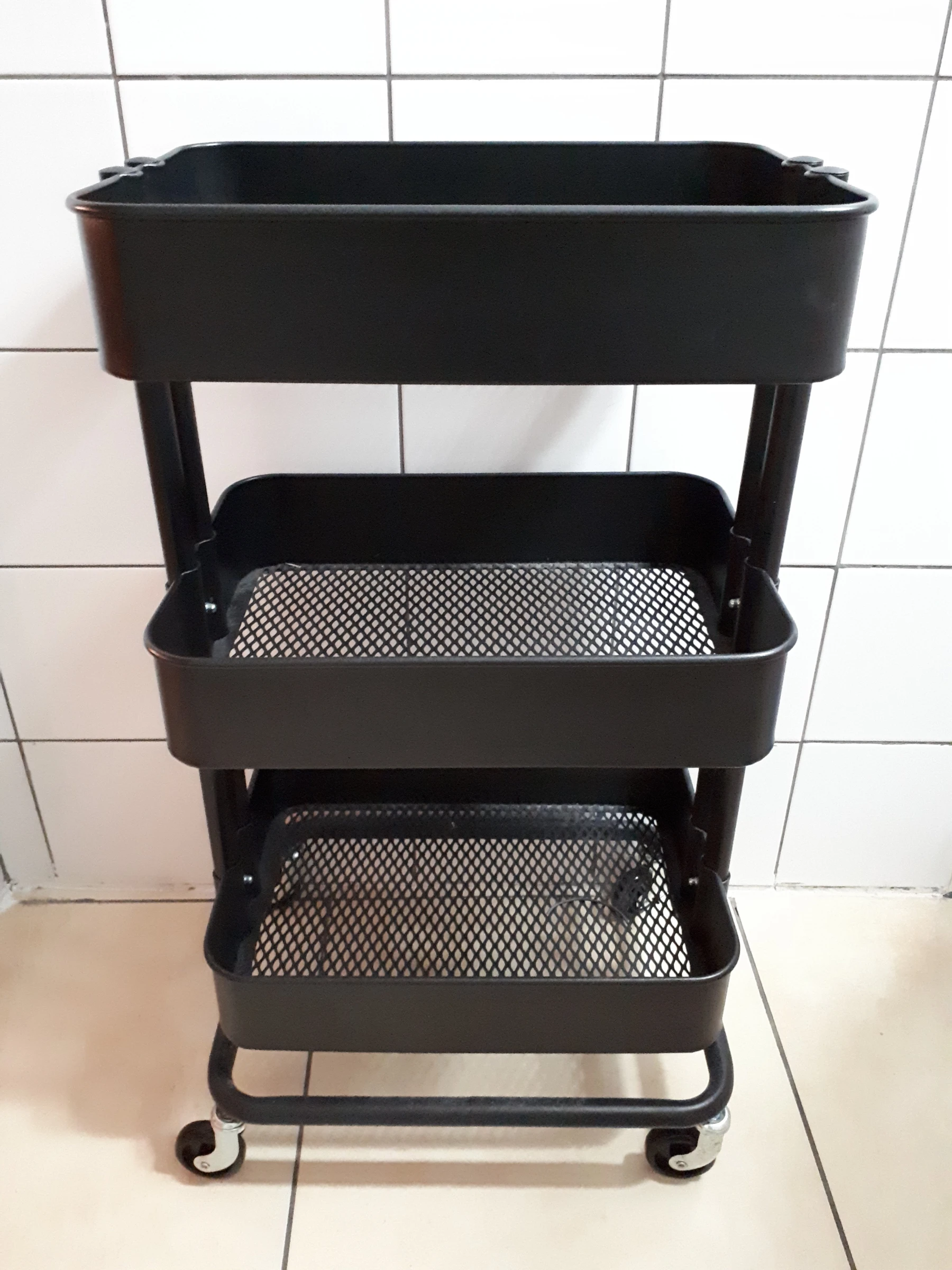
How to read this: This is original desk research, prepared with AI assistance. We have not handled a review sample or measured product performance. Historical product photos and separate placement-context photos are identified in their captions.
Quick view
RÅSKOG makes the most sense as a small, movable station for one routine. Choose it only after assigning it a parking space and checking the usable tray dimensions of the version you will buy.
Pros
- Three open levels make frequently used items easy to see.
- A movable format can serve different tasks within one room.
- The current US reference has lockable castors, according to IKEA.
Cons
- Open trays leave everything visible and need regular tidying.
- A cart needs a parking place as well as a route to move.
- Older RÅSKOG photographs do not establish the details of today’s version.
Reference & purchase checks
| Research reference | IKEA RÅSKOG, black, US article 405.821.81 |
|---|---|
| Published overall size | 13¾ × 17¾ × 30⅜ inches; verify the exact current listing |
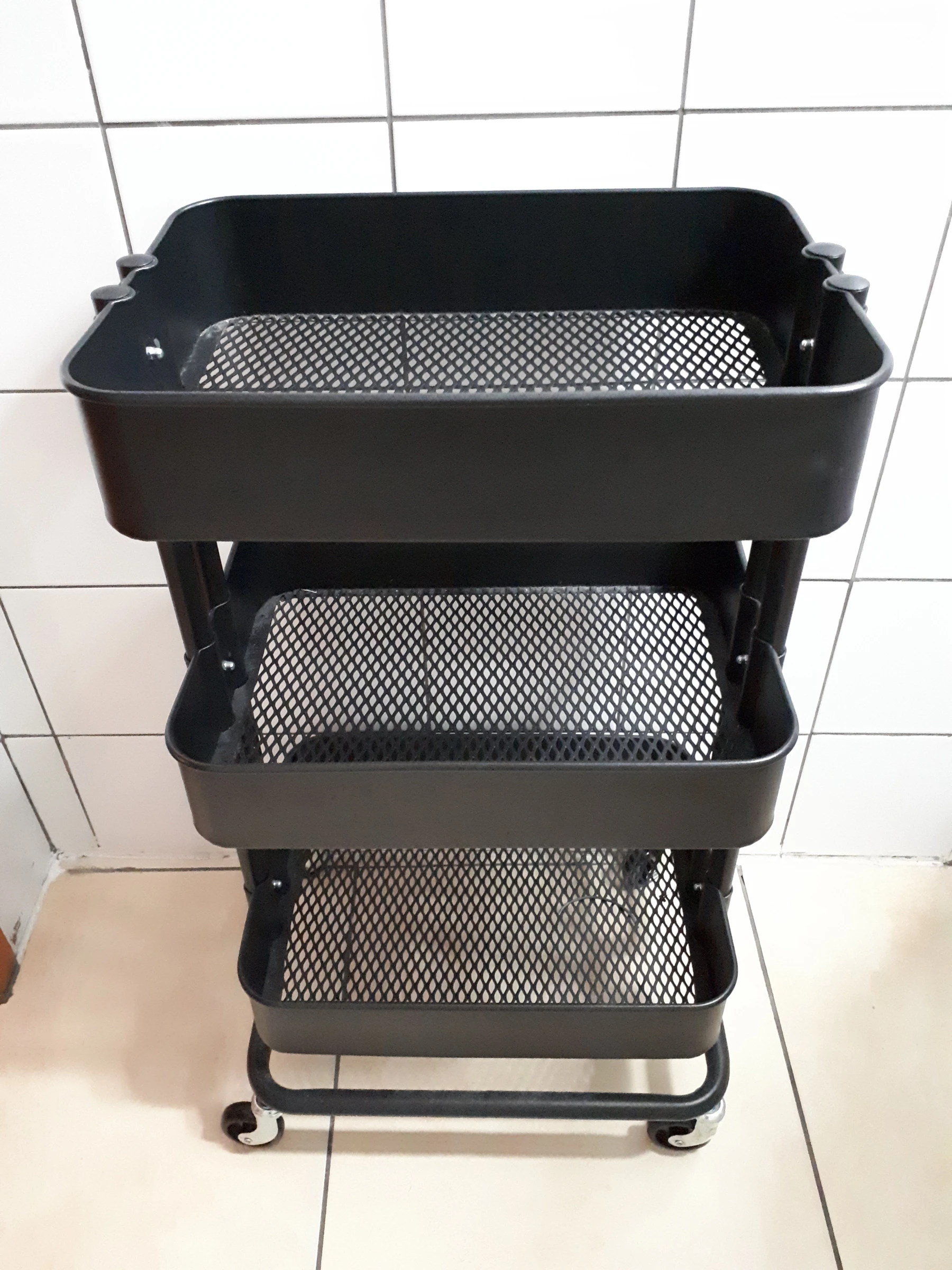
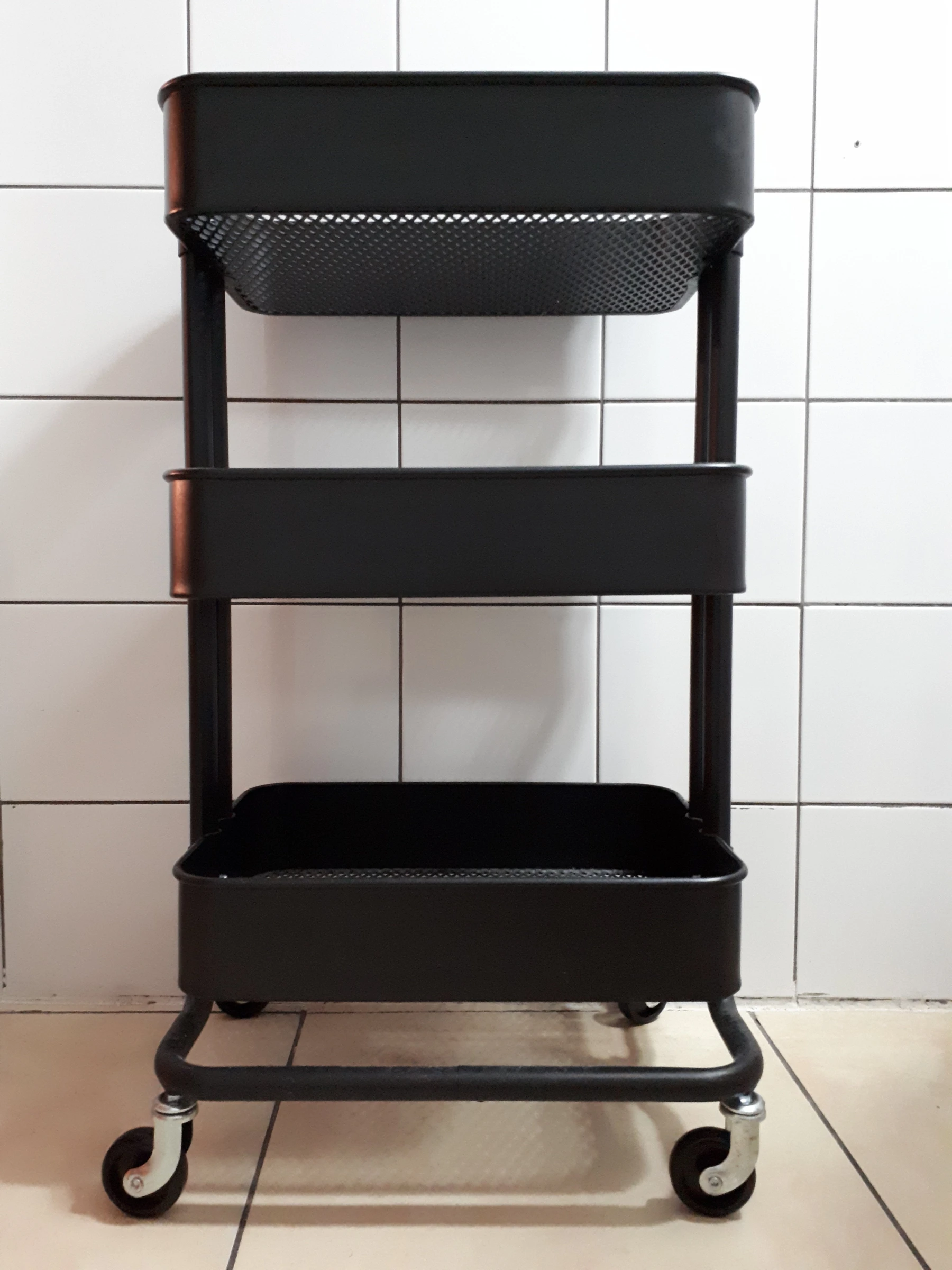
| Photo scope | Three views of an older 2017 cart, plus one labeled pantry-context photo |
| Purchase check | Tray interior, item height, parking space, assembly and complete delivered cost |
Our assessment in one sentence
A rolling cart is useful when it reduces a repeated trip, not simply because it introduces another shelf. For a kitchen with little cabinet space, RÅSKOG can hold a breakfast station, a small collection of cooking tools, or items that would otherwise spread across the counter. Combining all three jobs is more likely to produce a crowded trolley than an orderly kitchen.
This review evaluates the product family using IKEA’s current US black cart, article 405.821.81, as a reference. Its listed external footprint is 13¾ by 17¾ inches, with a height of 30⅜ inches. These are overall measurements, not a promise that a container of the same size will fit inside a tray. Our three product photographs show an older cart from 2017; their purpose is to illustrate the design, not certify the current SKU.

Give the wheels somewhere useful to go
Choose a resting position before buying. Open the nearest cabinet, dishwasher and refrigerator with an imaginary cart in that spot. Then walk the route while carrying a laundry basket or grocery bag. If normal use requires moving the cart every time you enter the room, its storage is being purchased with daily friction.
Movement can still be valuable without rolling the cart from room to room. Pulling it forward for cleaning or bringing a breakfast tray beside a dining table may be enough. Check your thresholds, floor finish and the current assembly instructions; we have not tested how the castors roll over rugs, joints or uneven flooring. Use the manufacturer’s limits rather than treating the trolley as a seat or a heavy-duty appliance stand.

Organize by the task, not by the available shelf
Start with the actual items you intend to store. Measure tall bottles with their lids on, and include the space your hand needs to lift them out. Keep the daily routine on the easiest-to-reach level. A lower tray can hold a separate, less frequent task, but a deep pile of unrelated objects defeats the advantage of open storage.
The pantry photograph below is a separate context image of jars on fixed shelves. It illustrates grouping ingredients by use; it is not a RÅSKOG installation or a photograph of products we tested. Treat additional containers as a second purchase decision. Buying a cart and a matching set of organizers together can commit your budget before you know what actually fits.

Count the complete cost of a small upgrade
Compare the price available to you, delivery or collection, and any organizer you genuinely need. We are not publishing a current sale price. If a basket you already own performs the same job on an existing shelf, using it first is a reasonable experiment. A cart earns its cost when the extra access or mobility solves a specific inconvenience.
We have not assembled a current unit or measured rolling resistance, corrosion, stability or long-term wear. Our conclusion is therefore conditional: consider RÅSKOG for a contained everyday routine with an agreed parking space. Pass if the room needs doors, a worktop or more floor area rather than another storage object.
Who should buy or use this approach?
A renter with a defined gap near a kitchen or work area who wants a portable home for a small set of frequently used items.
Who should pass?
Someone who needs concealed storage, a food-preparation surface, or storage that can block a doorway when parked.
The verdict
RÅSKOG makes the most sense as a small, movable station for one routine. Choose it only after assigning it a parking space and checking the usable tray dimensions of the version you will buy.
Sources & scope
Written for this edition, October 23, 2026. No live sale or stock claim is made. Editorial standards · Photo licenses.