Christmas Table Decor: A Cozy Holiday Table Without the Fuss
Most table-setting advice assumes a dining room with a leaf you can pull out and a sideboard for the overflow. Most of us have a table that seats four and a kitchen island. This is the plan for a warm, low-clutter Christmas table that works in a normal home - and survives a buffet without the food going cold.
Key takeaways
- A low centerpiece (under 14 inches) is the single rule that matters - anything taller blocks the conversation
- Spend on feel, not matching: a runner, a few candles, and one warm light beat a full coordinated set
- The problem nobody plans for is cold food - a warming mat holds serving temperature for the length of a meal
- Neutral bases (linen runner, clear glass) get reused every year; themed pieces get stored forever
- Everything on the table should move to the counter in one trip when you sit down to eat
The holiday table, made simple
A Christmas table has two jobs: it looks like a celebration, and it actually works for a meal. Those pull in opposite directions - the more you pile on, the harder it is to pass dishes and the faster it gets in the way. The trick is to treat the table as a surface you set and then clear, not a display you build.
If you want the full room-by-room map first, start from our main Christmas decor ideas hub. This guide zooms in on the one piece of furniture every guest touches: the table. The short version for busy people: keep the centerpiece low, light it warm, and solve the cold-food problem before you worry about napkin rings.
Start with the surface
Everything on a Christmas table sits on the surface, so the surface is the first decision. You have three options, and they are not equal:
A runner. A 12-16 inch wide strip down the middle. It frames the centerpiece, hides a less-than-perfect table, and leaves the placemats exposed at each seat. This is the default for a reason - it does the most styling per dollar.
A tablecloth. The most forgiving option if the table is scratched, mismatched, or just not the color you want for the season. The downside is cost and storage - a good cloth is bulky to keep eleven months of the year.
Kraft paper. A roll of brown paper as a runner or full cover ($4-6) that you can write on, stamp with potatoes, or leave plain. It is the budget classic and it is compostable, so there is nothing to store. For a casual gathering it reads as intentional rather than cheap.
Whichever you pick, keep it neutral - cream, linen, or kraft. A neutral base is what lets a few red candles or a sprig of greenery read as Christmas instead of as a theme park. Reserve color for the small, swappable pieces.
The centerpiece: low and warm
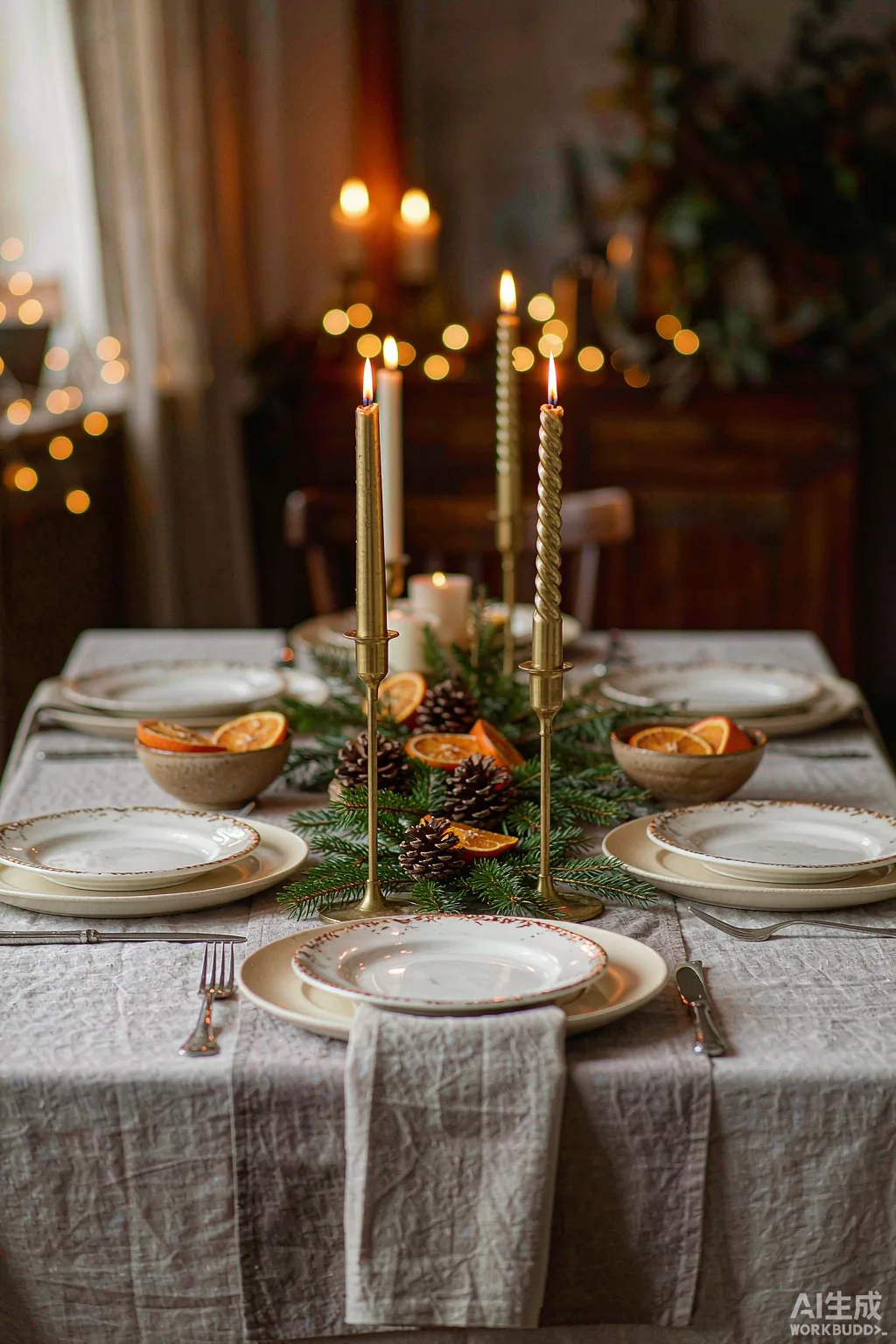
A centerpiece has one job: it has to be low enough to see over. Anything above roughly 14 inches blocks the person across from you and gets shoved aside halfway through dinner. The reliable formula is three pieces on one tray:
Something tall and narrow - three taper candles in holders. They give height without width, and at dinner they glow instead of glare.
Something low and wide - a tray, a shallow bowl, or the runner itself. This is the anchor that ties the arrangement together and keeps it from sliding.
Something organic - greenery, pinecones, a few clementines or a sprig of rosemary. This is what makes a table look finished rather than staged. If you want the full greenery logic, our hub has a section on faux vs fresh and why faux usually wins past two weeks.
Put the whole thing on one tray. When it is time to eat, the tray moves to the counter in a single trip and the table is suddenly functional. A centerpiece you cannot move is a centerpiece you will resent by dessert.
The problem nobody plans for: food goes cold
Here is the part every pretty tablescape photo leaves out: the food. You spend an hour setting the table, the casserole comes out of the oven, and by the time the third person has been served it is lukewarm. On a buffet it is worse - the dish at the end of the line is cold before the person at the start has finished.
This is not a decorating problem, but it is the one that decides whether the meal feels generous or strained. The old answers - chafing dishes, slow cookers left open, oven-on-warm - are bulky, fussy, or dry the food out. There is a quieter option that fits a normal kitchen, and it is worth planning around before the holiday, not discovering at 4pm on the day.
How a food warming mat works (and what to look for)
A food warming mat is a flat, low-heat pad that your serving dishes sit on. It holds the food at serving temperature for the length of a meal without cooking it further or drying it out. Unlike a chafing dish it lies flat, takes no setup, and wipes clean. For a home buffet or a table where dishes sit out between courses, it is the single most useful thing most people do not own yet.
What to look for:
Size. A 24-inch mat covers a couple of side dishes or a casserole; a 33-42 inch mat runs the length of a table or a full buffet line. Measure your most-used dish before you buy - a mat smaller than the dish does nothing.
Heat settings and a timer. Several heat levels let you match the dish (gravy wants less than a lasagna), and a timer means you are not unplugging it at midnight. Six hours of timer is plenty for a dinner party.
Rollable. A mat you can roll up stores in a drawer, not a closet. This is the difference between using it every December and never seeing it again.
A dependable entry in this category is the FEPPO food warming mat - a rollable 24-inch model with several heat settings and a timer, typically around $45 and one of the more reviewed options in the category. FEPPO's warming-mat line is its main holiday push, and the brand takes part in Amazon's Black Friday and Cyber Monday promotions, so it is worth checking the price in late November. (We have not tested it hands-on; the specs above are from the manufacturer.)
Place settings that don't need a matching set
You do not need eight identical plates to set a good table. In fact, a slightly mixed set often looks more considered than a boxed matching one. The goal is consistency in color and scale, not in the pattern.
Plates. White or cream, any pattern, as long as they are the same diameter. Mismatched white thrift-store plates look like a deliberate choice; mismatched sizes look like a mistake.
Napkins. Cloth napkins are the cheapest upgrade that reads as "occasion." A set of six in a neutral color gets used all year, not just in December. Fold them simply - a rectangle under the fork is enough.
Flatware. Whatever you own, unified in finish (all stainless, all gold-toned). Do not mix finishes at one table.
The point is to spend the budget on the three things that change the feel - the runner, the candles, the light - and let the plates be quietly unglamorous. Guests remember the glow, not the pattern.
Light the table, not the ceiling
Overhead light is the enemy of a cozy table. It flattens everything and puts everyone under interrogation lighting. The fix is to lower the light to the table:
Candles first. Three to five narrow tapers in holders, kept below eye level, is the sweet spot for a table that seats four to six. Use unscented candles near food - scent competes with dinner, and a pine candle two inches from the roast is a mistake everyone makes once.
One warm lamp behind the table. A lamp with a cut-out or patterned shade throws soft patterned light onto the wall, which reads as festive and works the rest of the year. If the dining area is part of a living room, the SWAIFDEE cut-out shade range is built around exactly this - a tree or star silhouette on the wall behind the table.
Dim what you cannot move. If the overhead must stay on, put it on the lowest dimmer setting or swap the bulb for the warmest one you have. The table should be the brightest thing in the room, not the ceiling.
If you're serving buffet-style
A buffet solves the "where does everyone sit" problem and creates a new one: the food sits out. Two adjustments make it work:
Run the warming mat along the buffet line. This is exactly what the longer 33-42 inch mats are for - the dish at the end of the line stays as warm as the one at the start. Set it up on the counter or a side table, not the dining table, so the eating surface stays clear.
Stage in serving order. Plates first, then the hot mains on the mat, then cold sides, then utensils last so people are not balancing a full plate and a fork. A buffet that flows in one direction is calmer than one people circle.
Keep the dining table for the finish. Dessert, coffee, and the low candle centerpiece live on the table. That way the table still feels set and special even while the main course is buffet-style.
A small-table version
If your table seats two or four against a wall, the rules tighten but do not change. The centerpiece shrinks to a low dish of ornaments or a single short candle. The runner becomes a placemat-sized rectangle at each end. And the lighting does more of the work, because there is less surface to dress.
The real win for a small table is portability: everything should clear to the counter in one trip. A tray centerpiece, a rollable warming mat stored in a drawer, candles that live in a box the rest of the year. A small table set this way looks intentional rather than cramped, and it never becomes the obstacle course a big centerpiece makes of a tight room.
A budget that holds
| Budget | What to buy | Covers |
|---|---|---|
| $60 | Kraft-paper runner + 3 taper candles + linen napkins (set of 6) + a few clementines for the centerpiece | A presentable, warm table. No mat yet - serve straight from the oven and keep courses tight. |
| $120 | The above plus a rollable food warming mat + one warm lamp or shade for behind the table | A table that stays warm through a buffet and glows without overhead light. The mat and lamp are reused all year. |
| $200+ | Add a linen runner and a second set of candles for the buffet counter | Handles a larger gathering and a separate buffet station without borrowing from the dining table. |
Spend in that order. Surface first (it frames everything), then the candles and light (they change the feel), then the warming mat (it fixes the one problem photos hide). The mat is the only item here that solves a problem rather than a look - which is why it is worth the step up from $60 to $120.
Christmas-table pieces worth considering
FEPPO food warming mat (24", rollable)
Several heat settings, a timer, and it rolls up for drawer storage. The quiet fix for a buffet or dishes that sit out between courses. FEPPO's warming line is its main holiday push and the brand takes part in Amazon BFCM.
SWAIFDEE cut-out decorative shade
Cast a tree or star pattern on the wall behind the table - festive at switch-on, normal decor the rest of the year. The most useful light source for a dining nook.
Linen table runner (12-14" wide)
Neutral cream or linen that frames the centerpiece and hides a worn table. Reused every season, so it earns its storage.
Taper candles + glass holders (set of 3)
Unscented, narrow, below eye level. Three of them do more for a table than a floral centerpiece that blocks the view.
Kraft paper roll (30" wide)
A runner or full cover you can write on or leave plain, then compost. The $6 base that makes everything else look intentional.
Christmas table questions, answered
How do you decorate a Christmas table on a budget?
Spend on the things that change the feel, not the things that match. A linen or kraft-paper runner, a few taper candles, and one warm light source do more than a full matched set. A presentable table comes in around $60; a fuller one around $120.
What makes a good Christmas table centerpiece?
One that stays under about 14 inches so people can see over it. The reliable formula is something tall and narrow (taper candles), something low and wide (a tray or runner), and something organic (greenery, pinecones, citrus) - all on one tray so it moves in a single trip.
How do I keep food warm during a Christmas buffet?
A food warming mat is the quiet fix: a flat, low-heat pad the dishes sit on, holding serving temperature for the length of a meal. Look for a rollable mat with several heat settings and a timer. A 24-inch model covers most side dishes; a 33-42 inch model handles a long table or a full buffet line.
What size table runner do I need?
About two-thirds the length of the table. On a 60-inch table that is a 40-inch runner; on a 72-inch table, a 48-54 inch runner. It should hang a few inches past the table ends but not to the floor.
How many candles should be on a Christmas table?
Three to five narrow tapers in holders, kept below eye level, is the sweet spot for a table that seats four to six. More than that and the table starts to feel like a chapel. Use unscented candles near food - scent competes with dinner.
Can you set a nice Christmas table in a small apartment?
Yes. A small table just means leaning on vertical and portable pieces: a narrow runner, a low dish of ornaments, and a warm light behind the table rather than a centerpiece that eats the surface. Everything should move to the counter in one trip when you sit down to eat.
The whole table sets in about twenty minutes and clears in one trip. Start with the surface, add a low centerpiece, light it warm, and - if you are feeding more than your own household - solve the cold-food problem before the day. For the rest of the room, head back to our Christmas decor ideas hub, or if the table is the whole project this year, the plan above is enough to make it feel like the holiday without the fuss.